






1. Thief Puzzle Game Overview
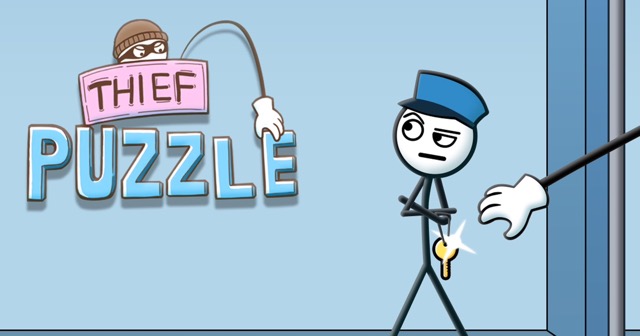
Thief Puzzle is a sharp, cleverly designed brain game that casts you as a master thief working your way through an escalating series of increasingly ambitious heists. From private homes and restaurants to heavily guarded banks and luxury resorts, each location presents a unique puzzle of observation, planning, and split-second execution. Your job isn't just to steal — it's to steal smart.
What distinguishes Thief Puzzle from standard puzzle games is the way it builds its challenge around realistic stealth logic. Success doesn't come from brute-force attempts or random experimentation; it comes from careful observation of each location's layout, understanding the patterns and schedules of the people inside, identifying the right entry window, and executing your plan with calm precision. The game rewards exactly the qualities you'd want in a real master thief: patience, composure, creativity, and decisive action when the moment is right.
The tool and skill upgrade system adds a satisfying RPG dimension to the heist progression. Crowbars, binoculars, stethoscopes, laptops — each tool you collect expands your ability to bypass specific obstacle types, while skill upgrades give your character new moves that open solution paths previously unavailable. An early-game safe might stump a beginner thief; an upgraded character with the right tools reads it like an open book.
The location variety keeps the game consistently surprising — every new venue has its own security configuration, guard patterns, and valuable targets that require a fresh approach. No two heists feel the same, and the escalating ambition of the missions — from house burglaries to central bank infiltrations — creates a satisfying narrative arc of growing mastery. Thief Puzzle is the thinking person's heist fantasy.
Key Details:
- Genre: Puzzle / Strategy / Brain Game
- Difficulty Level: Medium to Hard (escalates significantly with mission complexity)
- Average Play Time: 15–30 minutes per session
- Best For: Fans of stealth and strategy games, players who enjoy observation-based puzzle solving, anyone who loves the thrill of a perfectly executed plan
2. How to Play Thief Puzzle
Getting Started:
1. Survey your target location — study the layout, identify guard positions and patrol routes, note the locations of valuable items and security obstacles.
2. Learn the schedules and habits of anyone inside the location — their routines determine when safe entry windows open and close.
3. Equip appropriate tools from your collection based on the specific obstacles the location presents.
4. Time your entry carefully, moving when guards and occupants are positioned away from your planned route.
5. Work through the location decisively — collect your targets, bypass security measures using your tools and skills, and exit cleanly before detection.
Basic Controls:
- Tap / Click on Environment — interact with objects, doors, and security elements
- Tap / Click on Characters — observe or interact with guards and location occupants
- Click on Tool Icons — equip and deploy collected tools during a heist
- Click on Skill Menu — access and activate upgraded thief abilities
Objective:
Successfully rob each target location by observing its layout and occupant patterns, planning a viable entry and exit strategy, and executing the heist with the right tools and precise timing. Complete special missions — luxury resorts, guarded warehouses, central banks — that demand increasingly sophisticated planning and tool combinations to pull off successfully.
3. Thief Puzzle Features & Highlights
- Observation-Based Puzzle Design — Every location is a logic puzzle built around real stealth principles: surveying layouts, learning guard schedules, identifying opportunity windows, and executing with precision
- Diverse Heist Locations — Progress through private houses, restaurants, banks, luxury resorts, and heavily guarded warehouses — each with unique security configurations and valuable targets requiring fresh approaches
- Tool Collection & Upgrade System — Gather crowbars, binoculars, stethoscopes, laptops, and more — each tool expanding your ability to bypass specific security obstacles and unlock new approach options
- Thief Skill Development — Upgrade your character's abilities to unlock new moves that open solution paths unavailable at lower skill levels, adding RPG-style progression to the heist challenge
- Escalating Mission Complexity — Special missions involving maximum-security locations push your planning, tool mastery, and composure to their limits, delivering the most demanding and rewarding heist challenges in the game
4. Thief Puzzle Tips & Strategies
Beginner Tips:
- Observe before acting — always: The single most important habit in Thief Puzzle is taking the time to fully study a location before making any move. Guard routes, room layouts, occupant schedules, and security positions all reveal themselves through observation. Moving before this picture is complete almost always leads to detection.
- Learn patterns, not just positions: Guards and occupants don't just stand still — they move on repeating schedules. Watching a full cycle of their movement before acting gives you the timing information needed to thread through their patterns cleanly rather than stumbling into their path mid-heist.
- Prioritize high-value targets first: Not everything in a location is worth equal risk. Identify the most valuable items early and plan your route to reach them first — if circumstances force an early exit, you leave with maximum value rather than secondary items.
Advanced Strategies:
- Match your tools to each location's specific obstacles: Review the security configuration of each new location before entry and equip tools that directly address its particular challenges. A stethoscope is essential for safe-cracking; binoculars extend your observation range for large locations; a laptop disables electronic security. Arriving at a location with mismatched tools forces improvisation that rarely ends well.
- Create diversions to extend your opportunity windows: Some locations allow you to trigger environmental events that temporarily redirect guards or occupants, creating longer windows of unobserved movement than their natural schedules would otherwise provide. Identifying and using these diversion opportunities is the hallmark of advanced play.
- Plan your exit before you enter: The most common cause of failed heists isn't getting caught going in — it's getting caught coming out. Map your exit route before you begin collecting, ensure it doesn't cross any guard patterns you haven't accounted for, and keep it clear throughout the heist.
What to Watch Out For:
- Rushing when pressure builds: The feeling of time pressure during a heist — a guard getting closer, an occupant returning earlier than expected — triggers the instinct to move fast and improvise. This is exactly when composure matters most. Panic decisions in heist games almost always end in detection. Stay calm, reassess your position, and wait for your planned window rather than creating a worse situation by acting prematurely.
- Underestimating special mission security: The jump in difficulty between standard locations and special missions — luxury resorts, warehouses, central banks — is substantial. Entering these missions with the same approach that worked on simpler locations typically leads to quick failure. Upgrade your tools and skills specifically in preparation for each special mission before attempting it.
5. Thief Puzzle Game Elements Explained
Observation & Planning System
The observation and planning system is the intellectual core of Thief Puzzle and what genuinely separates it from puzzle games that rely on trial and error. Every location in the game is designed as a system of moving parts — guards on patrol routes, occupants with daily schedules, security systems with coverage patterns, and valuable items positioned in ways that require navigating all of the above to reach. The planning phase, before any action is taken, is where heists are actually won or lost. Players who spend time mapping the full picture — identifying all guard patrol cycles, noting where coverage overlaps, finding the gaps in schedules that create viable entry and movement windows — enter the execution phase with a clear plan that can be followed calmly and precisely. Players who skip this phase and improvise reactively spend the execution phase constantly surprised by obstacles they should have anticipated. The game's design consistently rewards the former approach: most locations have at least one clean solution available to a player who has fully observed the environment, and finding that solution is genuinely satisfying in the way that eureka moments in puzzle games always are.
Tool Collection & Tactical Application
The tool system adds tactical depth to Thief Puzzle's observation-based puzzle design by introducing equipment requirements that vary meaningfully between locations. Each tool addresses a specific category of security obstacle: the crowbar handles physical barriers and locked doors that can't be bypassed through timing alone; binoculars extend your observation range, letting you survey large locations and distant guard positions without physically entering dangerous areas; the stethoscope enables safe-cracking on locked containers that hold the highest-value items; the laptop interfaces with electronic security systems to disable cameras, alarms, or electronic locks that would otherwise make portions of a location impassable. Collecting tools through completed missions and understanding when each one applies is the equipment dimension of Thief Puzzle's strategy — the planning equivalent of knowing which key opens which door. Advanced locations often require combining multiple tools in sequence, and recognizing which tool combination a particular security configuration demands is the applied knowledge that separates successful high-level heists from failed ones.
Skill Upgrades & Character Progression
The skill upgrade system transforms Thief Puzzle from a static puzzle game into a character progression experience where your growing capabilities directly expand what solutions are available to you. At base skill level, your thief has a limited movement repertoire and can only bypass the simplest security configurations. Each upgrade unlocks new actions — quieter movement that allows closer approach to guards, faster interaction times that shrink the execution window needed for precise timing plays, new bypass techniques for security obstacles previously impassable — that open solution paths for locations your earlier character couldn't have handled. This progression means that returning to a previously difficult location after upgrading your skills sometimes reveals entirely new approaches that weren't available on the first attempt. The skill system also creates genuine strategic investment decisions: some upgrades improve general capability across all locations, while others are highly specialized for specific mission types. Identifying which upgrades align with your upcoming special missions and investing accordingly is the meta-strategy layer that keeps the game engaging across its full difficulty arc.
6. Thief Puzzle FAQ
Q: How do I avoid getting caught by guards in Thief Puzzle?
A: Guard avoidance is primarily a function of observation and timing rather than reflexes. Watch each guard's full patrol cycle before moving — identify the start point, route, and duration of their pattern, then move during the window when they're facing away from or moving away from your intended path. Never commit to a movement without knowing where every guard currently is and where they'll be by the time you reach your destination. If a guard approaches unexpectedly, stay still rather than moving — movement is almost always more detectable than stillness.
Q: What should I do if I get detected mid-heist?
A: Detection typically ends the current heist attempt and requires restarting the mission. Rather than rushing through the same approach again, use the failed attempt as information: identify exactly where and why you were detected, then adjust your plan accordingly. Detection usually reveals a gap in your observation phase — a guard pattern you didn't fully map, a coverage overlap you didn't notice, or a timing window that was shorter than you estimated. The next attempt should incorporate whatever you learned from the detection.
Q: How do I know which tools to bring to each location?
A: Survey the target location's description and any visible security elements before selecting your tools. Locations with electronic security systems (cameras, alarms) call for the laptop; locations with safes require the stethoscope; locations with physical barriers need the crowbar; large locations with distant guard positions benefit from binoculars. If a location description mentions specific security types, that's usually a direct signal about which tools the mission is designed around.
Q: Is Thief Puzzle playable on mobile devices?
A: Yes — Thief Puzzle uses tap-based interaction controls that work naturally on both mobile touchscreens and desktop browsers. The observation and planning mechanics don't require precise input timing, making them equally accessible on both platforms. The game's deliberate pacing — rewarding careful thought over fast reflexes — makes it particularly comfortable for mobile play during commutes or other shorter sessions.
Q: How do I unlock special missions like the central bank and luxury resort?
A: Special missions unlock progressively as you complete standard location heists and reach specific mission milestones. Building your tool collection and upgrading your thief's skills through regular mission completion is the most reliable path to being ready for special missions when they unlock. Each special mission is significantly more demanding than the standard locations that precede it — having the right tools equipped and relevant skills upgraded before attempting them dramatically improves your chances of first-attempt success.
7. Games Like Thief Puzzle
If you like Thief Puzzle, you might also enjoy:
- Brain Test - It shares the trick-question style of reading the situation before acting.
- Happy Glass - It also turns simple rules into clever setup puzzles with satisfying solutions.
- Apple Worm - It has a similar route-planning challenge where one careless move can trap you.