





1. Farming 10X10 Game Overview
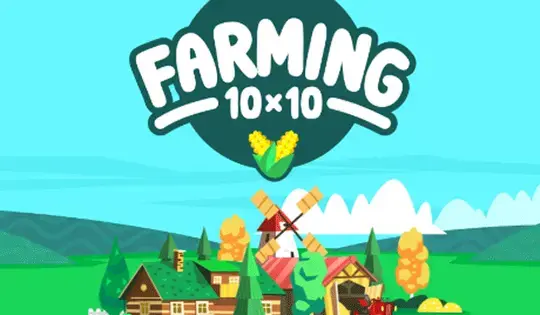
Farming 10x10 is a fresh and clever twist on the classic block puzzle genre, wrapping satisfying line-clearing mechanics in a bright, cheerful farming theme. Instead of abstract shapes falling from above, you're placing crop-themed blocks — vegetables, flowers, fruits, and wheat — onto a 10×10 grid, working to complete full horizontal or vertical lines that trigger a harvest and earn you points and cups.
The genius of Farming 10x10 lies in how naturally the farming metaphor maps to puzzle strategy. Every block placement is a planting decision: put it in the right spot and it contributes to a bountiful harvest line; put it carelessly and it chokes your board with dead space. The game rewards exactly the kind of mindful, deliberate thinking that good farming requires — reading the land, planning ahead, and making the most of what you've got.
What makes it genuinely compelling is the mounting tension as your board fills up. There's no timer, but there is a quiet, growing urgency as available spaces shrink and your block options stop fitting neatly where you need them. That pressure, balanced against the pure satisfaction of completing a full line and watching a harvest trigger, creates an addictive loop that's easy to start and hard to put down.
Visually, Farming 10x10 is a treat — vivid greens, cheerful reds and yellows, and charming crop animations make the board a lively, colorful place to spend time. It's accessible enough for a two-minute break yet deep enough to reward serious strategists.
Key Details:
Genre: Block Puzzle / Casual Strategy
Difficulty Level: Easy to Hard (escalates naturally as the board fills)
Average Play Time: 10–25 minutes per session
Best For: Puzzle fans, players who enjoy spatial thinking and planning, anyone looking for a relaxing but mentally engaging game
2. How to Play Farming 10X10
Getting Started:
A set of crop blocks is presented to you — each representing a different plant type (vegetables, fruits, flowers, or wheat).
Click and hold a block, then drag it onto any open area of the 10×10 grid.
Position your block to contribute toward completing a full row or column of 10.
Complete a horizontal or vertical line of 10 blocks to trigger a harvest — clearing that line and earning points and cups.
Continue placing blocks strategically until no remaining blocks can fit on the board.
Basic Controls:
Hold Left Mouse Button — pick up and drag a block
Release Left Mouse Button — place the block on the selected grid tile
Objective:
Complete as many full horizontal or vertical lines of 10 blocks as possible before the board fills up. Each completed line triggers a harvest, earning you points and cups. The game ends when no available block can be placed anywhere on the remaining board space — so the longer you keep the board open and playable, the higher your final score.
3. Farming 10X10 Features & Highlights
- Farming-Themed Block Puzzle — A fresh spin on the classic 10×10 puzzle format, with crop blocks representing vegetables, fruits, flowers, and wheat adding thematic charm to every move
- Harvest Line Mechanic — Complete full rows or columns of 10 to trigger satisfying harvest clears, earning points and cups that track your overall progress and accomplishments
- Strategic Depth Without Time Pressure — No countdown timer means every placement is a deliberate, thoughtful decision — the challenge comes from spatial planning, not speed
- Escalating Natural Tension — As the board fills, available moves shrink and every block placement becomes more critical, creating organic difficulty that builds throughout each session
- Vibrant 2D Graphics — Lush, colorful crop animations and cheerful block designs make the grid a visually delightful space, with each plant type rendered in vivid, distinctive hues
4. Farming 10X10 Tips & Strategies
Beginner Tips:
Always place blocks toward one side of the board first: Building from a corner or edge gives you the most control over your grid layout and keeps more open space available longer.
Think in lines, not just placements: Before placing any block, ask yourself — does this move contribute to completing a row or column? Every placement should be working toward a harvest line, not just filling space.
Don't leave isolated single gaps: A lone empty tile surrounded by filled blocks can never be part of a complete line, making it permanently wasted space. Always plan so gaps can eventually be filled.
Advanced Strategies:
Set up multi-line clears: Positioning blocks so that a single placement completes both a horizontal and vertical line simultaneously doubles your points and clears far more board space in one move.
Manage your three block options together: You're always choosing from a set of available blocks — evaluate all three as a group before placing any, since each placement affects where the remaining blocks can go.
Keep the center open as long as possible: Edge and corner areas are easier to fill efficiently; saving the center for later gives you maximum flexibility when your block options become more restricted.
What to Watch Out For:
Placing blocks without a line strategy: Filling the board randomly feels fine early on but leads to an unworkable grid of gaps and dead zones within just a few turns. Every block needs a purpose from the very first move.
Ignoring vertical lines in favor of horizontal ones: Most players instinctively think in horizontal rows — remembering to work toward vertical column clears simultaneously opens up many more multi-clear opportunities and keeps the board healthier longer.
5. Farming 10X10 Game Elements Explained
The 10×10 Grid & Block Placement:
The 10×10 grid is the entire playing field of Farming 10x10, and understanding its geometry is the foundation of good play. The grid offers 100 tiles to fill, but not all positions are equal in strategic value. Corner tiles and edge tiles are generally easier to incorporate into complete lines, since they only need to be filled from one or two directions. Center tiles require contributions from all sides, making them harder to use efficiently late in the game when block options become limited. Each turn presents you with a set of crop blocks of varying shapes — some single tiles, some L-shapes, some straight lines — and your job is to fit them onto the grid in positions that advance your line-completion goals. The art of grid management is keeping the board open and workable for as long as possible while consistently harvesting completed lines.
The Harvest Line System:
The harvest mechanic is the core scoring engine of Farming 10x10, and it works on a beautifully simple principle: fill any complete row or column of 10 tiles and it instantly clears — triggering a harvest animation, awarding points, and opening that entire line back up as fresh empty space. This is the critical dynamic that makes the game more than just a filling exercise: cleared lines are your primary tool for keeping the board playable. A well-executed harvest line doesn't just earn points — it buys you space to keep placing blocks and extending your game. Completing multiple lines simultaneously with a single block placement is the highest-skill play in the game, as it clears maximum space while earning bonus points. Every block placement decision should be evaluated through the lens of "does this help me complete a line sooner?"
Scoring & Cups:
Points and cups are the twin measures of your progress and accomplishment in Farming 10x10. Points accumulate with every harvest line completed — more lines cleared in quick succession, or multiple lines cleared simultaneously, yields higher point totals. Cups serve as milestone markers, tracking your overall performance and unlocking rewards and enhancements as you reach new thresholds. They give the game a sense of long-term progression beyond any single session: even a game where your board fills quickly still contributes to your cup total and reward unlocks. The scoring system cleverly incentivizes quality of play over quantity of block placements — a short session with several efficient multi-line clears will outscore a long session of careless single placements. Chasing higher cup counts naturally pushes players toward more deliberate, strategic thinking with every move.
6. Farming 10X10 FAQ
Q: How do I place blocks on the grid?
A: Hold down the left mouse button on any block from your available set, drag it across the grid to your desired position, and release to place it. The block will snap into the grid tiles — if the placement is valid and the space is empty, it will lock into position.
Q: What happens when I complete a line?
A: When any full horizontal row or vertical column of 10 tiles is filled, it immediately triggers a harvest — the entire line clears with a satisfying animation, you earn points and cup progress, and those tiles become empty again, giving you fresh space to continue placing blocks.
Q: How does the game end?
A: Farming 10x10 ends when none of the currently available blocks can fit into any remaining open space on the grid. There is no timer — the game concludes purely based on board state. This means smart spatial planning is the only thing standing between you and a high score.
Q: Is Farming 10x10 playable on mobile?
A: Farming 10x10 is a browser-based game using click-and-drag controls with the mouse, making it best suited for desktop and laptop play. Touch-based mobile play may work in some browsers but is not the primary design target — a mouse gives you the most precise block placement control.
Q: How do I unlock rewards and enhancements?
A: Rewards and enhancements are unlocked by earning cups through completing harvest lines and accumulating points across your sessions. The more lines you clear and the higher your scores, the faster your cup total grows — keep playing, refine your strategy, and new unlocks will open up progressively.
7. Games Like Farming 10X10
If you like Farming 10X10, you might also enjoy:
- Block Blast - It offers another space-management block puzzle where clean row and column clears matter.
- Hexa Puzzle - It challenges the same spatial planning skills with hex-shaped pieces on a limited board.
- Puzzle Farming - It keeps the farming theme while shifting the puzzle focus toward matching and expansion.