
1. Brain Test Game Overview
Brain Test is a wildly creative puzzle game that throws out the rulebook on what a puzzle is supposed to be. Forget straightforward logic grids or matching patterns — Brain Test challenges you to think sideways, upside down, and completely outside the box. Each puzzle presents a seemingly simple question or scenario, then rewards unconventional thinking over textbook answers. The catch? The solution is almost never what it appears to be at first glance.
What makes Brain Test genuinely captivating is how consistently it surprises you. One puzzle might ask you to find the largest number on screen — and the answer involves manipulating objects you didn't think were interactive. Another might present a simple arithmetic problem whose solution requires ignoring the math entirely and focusing on something completely different in the image. The game delights in subverting expectations, and the moment of realization when a clever solution clicks is one of gaming's most satisfying small pleasures.
Observation is at the heart of almost every challenge. The color of an object, the position of a character, a detail in the background, the exact wording of the question — any of these can be the key that unlocks an answer nobody expected. Brain Test trains you to slow down, read carefully, and question every assumption you bring to a puzzle. It's the rare game that genuinely makes you think differently, not just think harder.
With no time pressure, unlimited attempts, and the freedom to experiment freely with every object on screen, Brain Test is as accessible as it is clever — perfect for quick sessions of mind-bending fun or longer stretches of satisfying puzzle exploration.
Key Details:
- Genre: Brain Teaser / Creative Puzzle / Casual
- Difficulty Level: Variable (each puzzle is its own unique challenge)
- Average Play Time: 5–20 minutes per session
- Best For: Players who love lateral thinking and creative problem-solving, fans of unconventional puzzle games, anyone who enjoys the satisfying "aha" moment of a surprising solution
2. How to Play Brain Test
Getting Started:
1. Read the puzzle question or scenario carefully — pay attention to every word, as phrasing often contains hidden clues.
2. Examine every element of the image — objects, characters, colors, positions, and background details can all be relevant.
3. Try interacting with objects by tapping, dragging, or repositioning them — many puzzles require physical manipulation of on-screen elements.
4. If your first instinct doesn't work, challenge your assumptions — the answer is frequently not what conventional thinking suggests.
5. Experiment freely — the game imposes no penalty for wrong attempts, so try everything until something works.
Basic Controls:
- Tap / Click on Objects — interact with individual elements on screen
- Click and Drag — move, reposition, or combine objects in the puzzle scene
- Tap on Answer Fields — input text or number answers when required
Objective:
Solve each puzzle by finding the correct — often unexpected — answer or action. Progress through increasingly creative and surprising challenges by thinking laterally, observing carefully, and interacting with the puzzle environment in unconventional ways. There are no wrong attempts — experiment freely until the solution reveals itself.
3. Brain Test Features & Highlights
- Lateral Thinking Puzzle Design — Every puzzle is built around an unexpected solution that rewards unconventional thinking over straightforward logic — no two challenges follow the same formula
- Fully Interactive Puzzle Scenes — Objects in each puzzle can be tapped, dragged, combined, or repositioned — the entire scene is potentially part of the solution, not just decoration
- Observation-Based Challenges — Many puzzles hinge on noticing small details — a color difference, a hidden object, an unusual position — that most players initially overlook
- No Time Pressure or Attempt Limits — Complete freedom to experiment, fail, and try again without penalty, making exploration and creative trial-and-error genuinely viable strategies
- Consistently Surprising Variety — Each new puzzle introduces a completely different type of challenge, ensuring the game never settles into a predictable pattern that can be gamed
4. Brain Test Tips & Strategies
Beginner Tips:
- Read every word of the question twice: Brain Test's puzzle questions are carefully worded — the exact phrasing often contains the entire clue to the solution. A question asking for "the biggest" something might not mean biggest by number; a question asking you to "help" a character might not require the most obvious form of help.
- Tap everything you haven't tried yet: If you're stuck, systematically interact with every element visible on screen — objects in the background, parts of the interface, even the question text itself. Brain Test regularly hides solutions in places players don't think to look.
- Ignore your first instinct and try the opposite: The game is specifically designed to trick your initial assumption. If your gut says the answer is obvious, that's usually a signal to look harder at what the puzzle is actually asking.
Advanced Strategies:
- Consider the puzzle from multiple angles simultaneously: Some Brain Test puzzles have solutions that combine two or three unexpected elements — a repositioned object plus a hidden interaction plus an unconventional reading of the question. If single-element solutions aren't working, consider what combinations of interactions might be needed.
- Pay attention to color, size, and position as potential answer keys: When a puzzle involves multiple objects of the same type, differences in color, scale, or screen position are almost always deliberate clues. The game rarely places objects arbitrarily.
- Use hints strategically on puzzles that feel logically impossible: Some Brain Test puzzles require a conceptual leap that's genuinely hard to arrive at independently. Using a hint on these specific puzzles is a better investment than grinding frustrated attempts — understanding one unexpected solution type makes similar puzzles in later levels easier to crack.
What to Watch Out For:
- Taking the question too literally: Brain Test frequently uses questions that sound straightforward but require a completely non-literal interpretation. "What is the largest number?" might require you to create a larger number by moving digits rather than identifying an existing one. Always question whether the puzzle is asking what it appears to be asking.
- Overlooking interactive elements outside the central puzzle area: The answer is sometimes in the interface itself — the question text, the scene's border, or elements that appear to be purely decorative. Treat the entire screen as a potential puzzle space, not just the central image.
5. Brain Test Game Elements Explained
Lateral Thinking Puzzle System
The lateral thinking puzzle system is Brain Test's defining feature and the quality that makes it genuinely unlike any other puzzle game. Traditional puzzles have a logical path from question to answer that rewards knowledge or pattern recognition. Brain Test's puzzles are specifically designed to misdirect you down that logical path — and then reward you for abandoning it. A puzzle might appear to be a math problem but require a physical interaction with the screen. It might appear to be a visual search task but require manipulating the question itself. It might appear to have an obvious single answer but require combining three unrelated elements in the scene to produce a completely unexpected result. The design philosophy behind this system is that the puzzle's difficulty comes not from the complexity of its solution but from the challenge of abandoning the assumption that you already understand what kind of problem it is. Every puzzle in Brain Test is, at its core, a test of cognitive flexibility — the ability to release one mental model and adopt a completely different one.
Observation & Interactive Scene System
The interactive scene system transforms every Brain Test puzzle from a static question into a dynamic environment to explore. Every element placed in a puzzle scene — foreground objects, background details, characters, environmental features — is potentially interactive and potentially relevant to the solution. Objects can be tapped to trigger responses, dragged to new positions that create new interactions, scaled by pinching, or combined with other objects in ways that produce surprising results. This interactivity means that the puzzle space extends well beyond what the question text suggests — and the most creative solutions frequently involve elements the player didn't initially consider part of the puzzle at all. The observation dimension complements the interactivity: before experimenting with objects, careful visual inspection of the scene often reveals hidden details — a partially obscured object, an unusual color relationship, a character expression that changes based on other scene elements — that point toward the solution without explicitly stating it. Together, observation and interaction form the two-step methodology that cracks most Brain Test puzzles: see something unexpected, then do something unexpected with it.
Difficulty Variation & Progression
Brain Test's difficulty curve operates differently from most puzzle games — rather than a smooth linear escalation, it delivers a varied landscape of challenges where individual puzzle difficulty is highly unpredictable. A puzzle that stumps one player for ten minutes might be solved instantly by another whose thinking naturally aligns with that puzzle's lateral twist, while an apparently simple-looking puzzle with a single object might require the most creative conceptual leap in the entire game. This unpredictability is a feature rather than a flaw: it means every player's experience with the game is genuinely personal, shaped by which types of lateral thinking come naturally to them and which require more mental reorientation. The progression system rewards completing each puzzle regardless of how many attempts it required, ensuring that the satisfaction of finally cracking a difficult puzzle is never undermined by failure penalties. Hints are available as a safety net for puzzles that resist all independent attempts, providing the conceptual bridge needed to understand a solution type that was simply outside a player's initial thinking range.
6. Brain Test FAQ
Q: How do I solve puzzles in Brain Test?
A: Start by reading the question carefully and interacting with every object visible on screen — tap, drag, and reposition anything that moves. Brain Test puzzles rarely have straightforward logical solutions; most require either a non-literal interpretation of the question, an unexpected interaction with scene elements, or combining objects in ways that aren't immediately obvious. If an approach isn't working, abandon it entirely and try something that feels counterintuitive — that's usually where the solution is.
Q: What should I do if I'm completely stuck on a puzzle?
A: First, try interacting with every element on screen that you haven't touched yet — Brain Test frequently places solutions in objects players assume are decorative. Second, reread the question and consider whether any word in it could have a different meaning than you initially assumed. Third, try manipulating the question text or interface elements themselves — some puzzles use these as part of the solution. If none of these approaches works, use the hint system to get a nudge in the right direction without fully spoiling the solution.
Q: Is there a time limit or penalty for wrong answers in Brain Test?
A: No — Brain Test imposes no time limits and no penalties for incorrect attempts. You can try as many approaches as you like, interact with objects in any order, and restart puzzle interactions as often as needed without any consequence. This freedom to experiment without penalty is central to the game's design philosophy, encouraging creative trial and error as a legitimate problem-solving strategy rather than penalizing it.
Q: What kinds of puzzles does Brain Test include?
A: Brain Test includes a wide variety of puzzle types — visual observation challenges where you spot hidden details or differences, interactive physics puzzles where repositioning objects creates new outcomes, wordplay puzzles where the question's literal meaning differs from its intended meaning, math-adjacent puzzles whose solutions aren't mathematical, and scenario puzzles where helping or solving requires completely non-obvious actions. No two puzzles follow the same formula, which is what keeps the game consistently surprising across its full puzzle catalog.
Q: Is Brain Test playable on mobile devices?
A: Yes — Brain Test is designed for both desktop browser and mobile play. The tap-and-drag interaction controls work naturally on touchscreens, and the puzzle scenes are designed to be fully accessible on mobile display sizes. The no-timer, no-penalty design makes it equally comfortable for a two-minute mobile session or a longer desktop sitting, and the self-contained nature of each puzzle means you can put it down and pick it back up at any point without losing progress.
7. Games Like Brain Test
If you like Brain Test, you might also enjoy:
- Thief Puzzle - It shares the short-stage trick-puzzle structure with clever solutions.
- Happy Glass - It also rewards thinking past the obvious answer and setting up the right outcome.
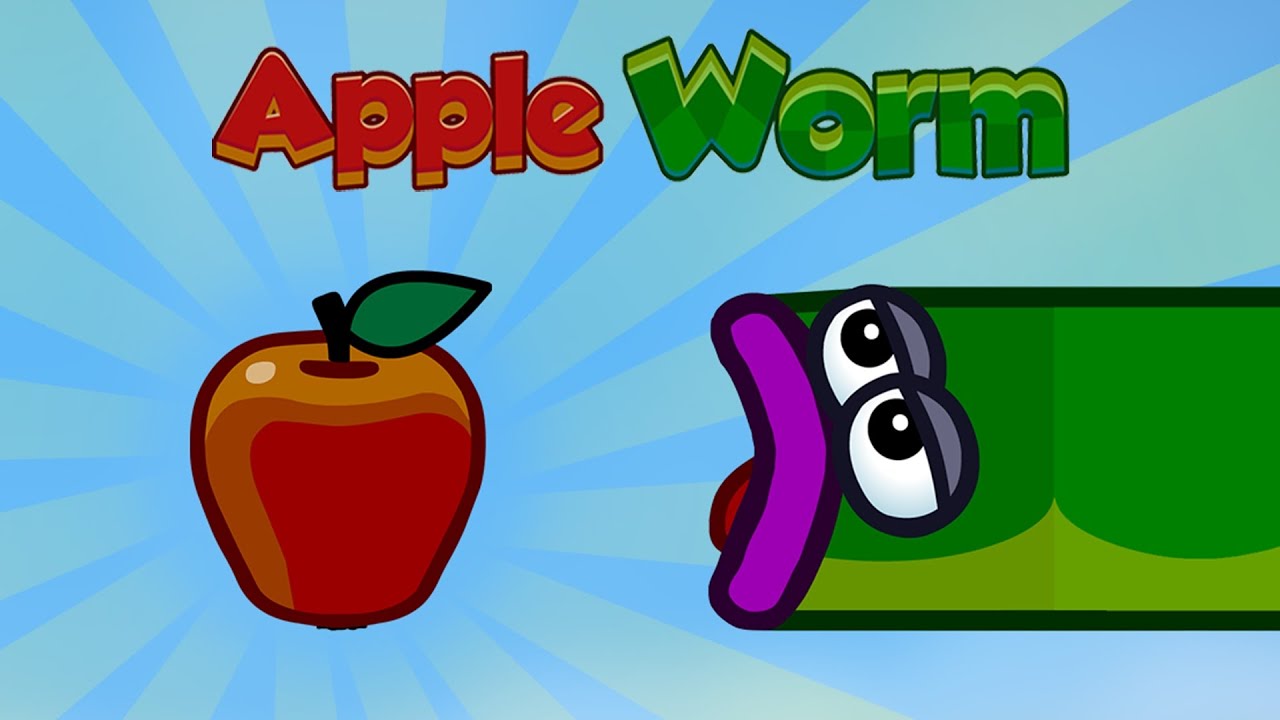
- Apple Worm - It offers another compact logic challenge built around planning a safe solution.